


An Ancient Common That Rewards Slow Looking
Port Meadow is one of those rare places where a birdwatching trip can begin on a whim. You do not need a permit, a hide booking or a carefully planned route. You simply walk out of north-west Oxford, pass the last few houses, and the city gives way to a wide, flat expanse of grassland grazed by cattle and ponies, with the Thames curling along its western edge and the canal running down the eastern side.
What makes it special is the way it changes. In dry summer months it is rough pasture, ankle-high and humming with insects. After a wet winter it becomes a shallow lake, sometimes stretching almost from bank to bank, and that is when the birds arrive in numbers. The combination of open water, muddy margins and undisturbed grass makes it one of the best inland sites in Oxfordshire for wintering wildfowl and passage waders. It is also a Site of Special Scientific Interest, and parts of it are said never to have been ploughed since the Domesday Book.
The terrain is famously level, which means an easy stroll for anyone who does not fancy a climb. Do not mistake flat for tidy, though. Cattle poach the ground, the edges are boggy, and the paths can be genuinely muddy between November and March.
Getting There and Finding Your Feet
There are several straightforward ways in. From the southern end, near Walton Well Road and Aristotle Lane, you step almost immediately onto the common. From the north, you can come in near Wolvercote and Godstow Road. The Thames Path follows the western boundary, and the canal towpath runs along the eastern side, both of which make pleasant approach routes in their own right.
Once on the meadow, the layout is simple enough to hold in your head:
- The open grassland in the middle, best for grazing wildfowl, lapwing flocks and the occasional passing raptor.
- The flooded centre after heavy rain, which pulls in ducks, gulls and waders.
- The Thames edge on the west, with quieter water and overhanging trees.
- The canal and its scrub on the east, good for kingfisher, grey wagtail and warblers in spring.
- Burgess Field to the north-east, a scruffy patch of scrub and rough grass that is excellent for migrants.
Winter: Wildfowl on the Floods
This is Port Meadow at its best. As the water rises, so does the birding. Wigeon are the signature species, often in their hundreds, whistling softly as they graze on the grass rather than dabbling like typical ducks. Look for teal bunched along the shallow edges, shoveler sweeping their outsized bills through the surface, and gadwall, pintail and mallard scattered among them. In colder spells, goldeneye and goosander appear on the deeper channels, and a smew is always a possibility worth checking for.
The muddy fringes matter just as much as the water. This is where lapwing stand in loose, restless flocks, their dark green backs catching the light, often with golden plover mixed in and betraying themselves by their mournful call. Snipe hide in the tussocks, ruff and dunlin drop in during passage, and redshank pick along the margins. In a hard frost, when everything else freezes over, a bittern occasionally turns up in the remaining open water — a genuine event for the county.
Gulls, Raptors and the Unexpected
Late afternoon in winter is the time to linger. Gulls gather on the floods and on the meadow to roost, and the numbers can be impressive: black-headed, common, lesser black-backed and herring gulls by the thousand. Sorting through them is a rewarding habit, because this site has a long record of scarcer visitors, including Mediterranean, yellow-legged and Caspian gulls, with Iceland and glaucous gulls turning up in some years.
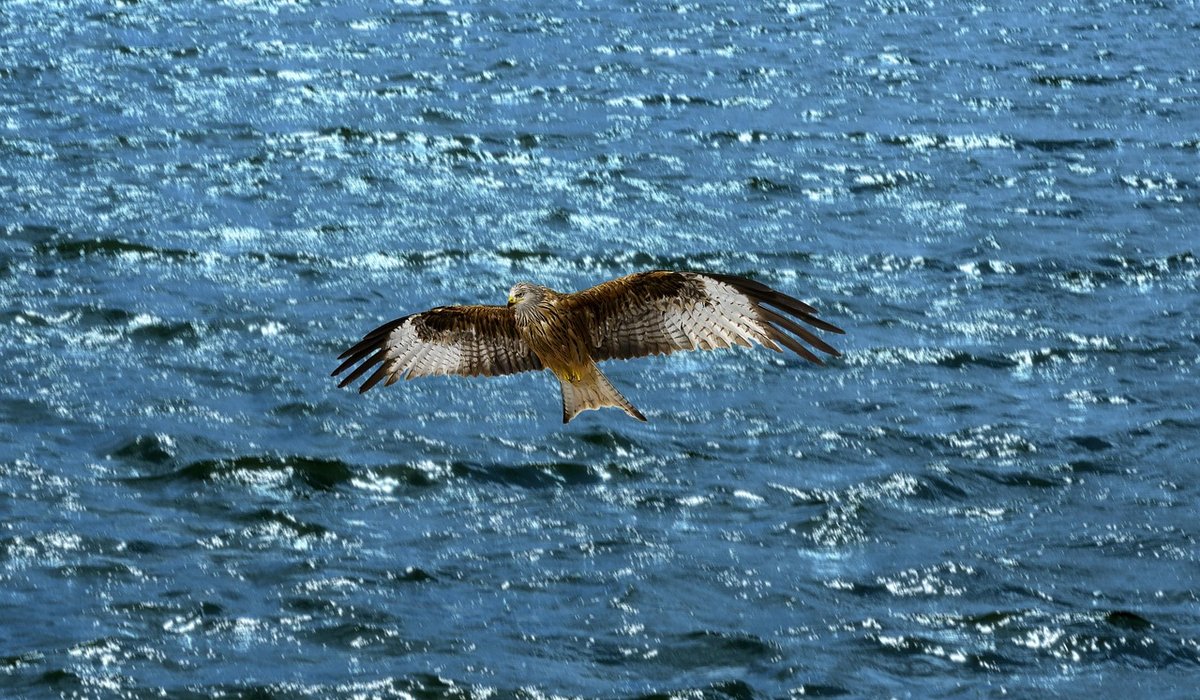
Above the flocks, keep half an eye skyward. Red kites are now a constant presence, kestrels hover over the rough grass, and a peregrine sometimes puts everything up in a single panicked sweep. In summer, a hobby hawking insects over the floods is one of the finest sights the meadow offers.
Spring, Summer and the Scrubby Edges
By April the emphasis shifts. Passage migrants drop onto the pasture edges: wheatear on the fence posts, whinchat on the taller stalks, yellow wagtail along the damp hollows, and occasionally a ring ouzel feeding quietly in the open. Skylarks sing over the middle of the meadow, meadow pipits and reed buntings work the rougher patches, and sedge warblers chatter from the ditches.
The canal-side vegetation is worth a detour, especially early in the morning. Cetti's warbler has become a reliable if infuriating presence here — heard far more often than seen — while kingfisher and grey wagtail flash along the water. In Burgess Field, whitethroat, lesser whitethroat, willow warbler and linnet all breed in the scrub, and grasshopper warblers have reeling song to listen for in early summer.
Timing, Kit and Simple Courtesy
Arrive early for quiet and good light, but plan a return visit for the last hour before dusk if gulls and wildfowl are your target. Check the flood level before you set out, as the character of the walk changes completely with the water. In wet months, wellington boots are not optional; take a spare pair of socks in the car anyway.
- Binoculars of 8x42 or similar are ideal, and a scope helps enormously for scanning distant wildfowl.
- Layers and a waterproof — the meadow is exposed and the wind can be biting.
- A notebook or app for recording counts, which are genuinely useful to local recorders.
Because livestock graze here year-round, keep dogs under close control and on a lead near cattle and ponies, and always close gates behind you. Give roosting and feeding flocks a wide berth rather than walking through them; disturbance costs birds energy they cannot spare in cold weather. Take your litter home, and if a bird seems unwell, leave it alone.
Above all, walk slowly. Port Meadow does not give up its best moments to people in a hurry.


Leave a reply